Most stops
Rafting day with bathing
Elephants plus river
- ContactBathing, feeding
- MixRaft, falls, turtles
- PaceBusy
Guides
Language
Currency
See open slots$69 and up · cancel at no chargeInteractive tick list
Things to do · 9 items
Tap to check items off; your progress is remembered on this device.
0 / 9 ready
Ready to go. Only the date and the number of travellers are left to choose.
Secure your spotSome Khao Lak elephant stops let you feed and bathe the animals, others only let you watch. Here is how the visits differ, what Thai officials say about camps and how to choose one you feel good about.
Editorial team, khaolakrafting.com · Updated November 12, 2026 · 7 min of reading
Essentials
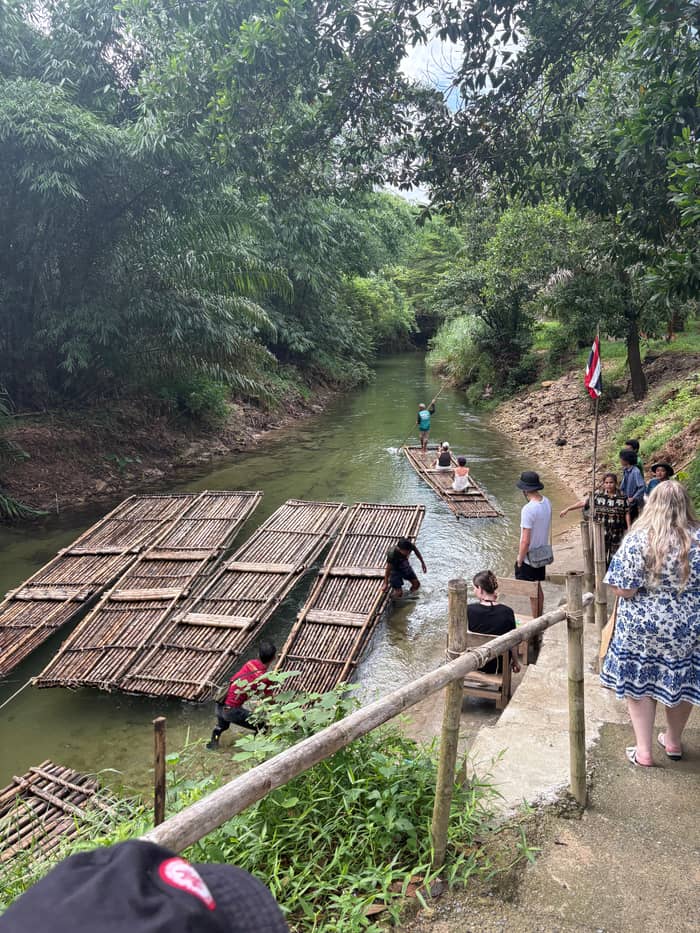
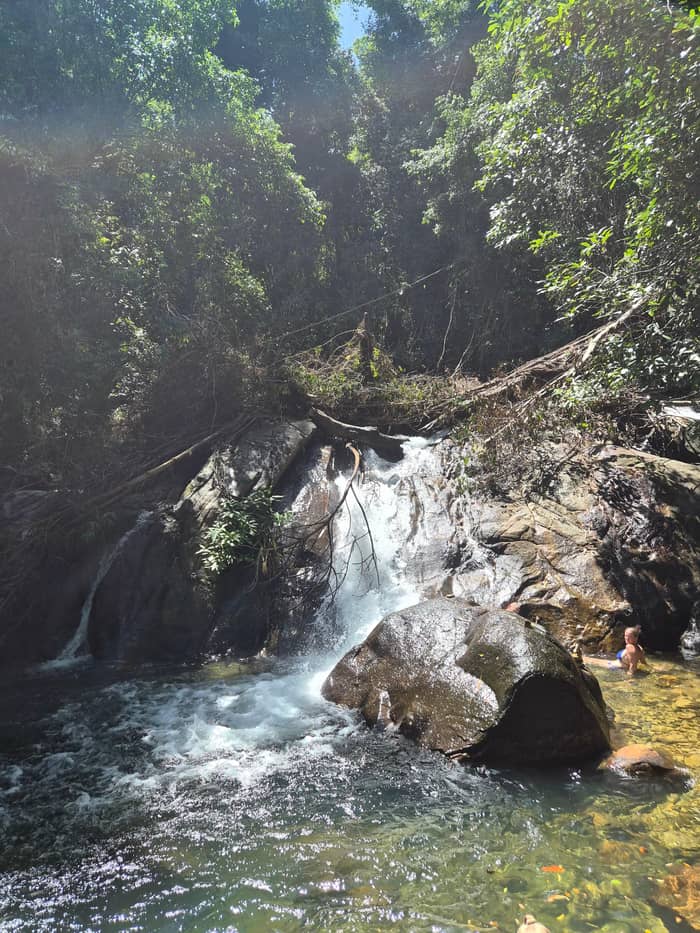
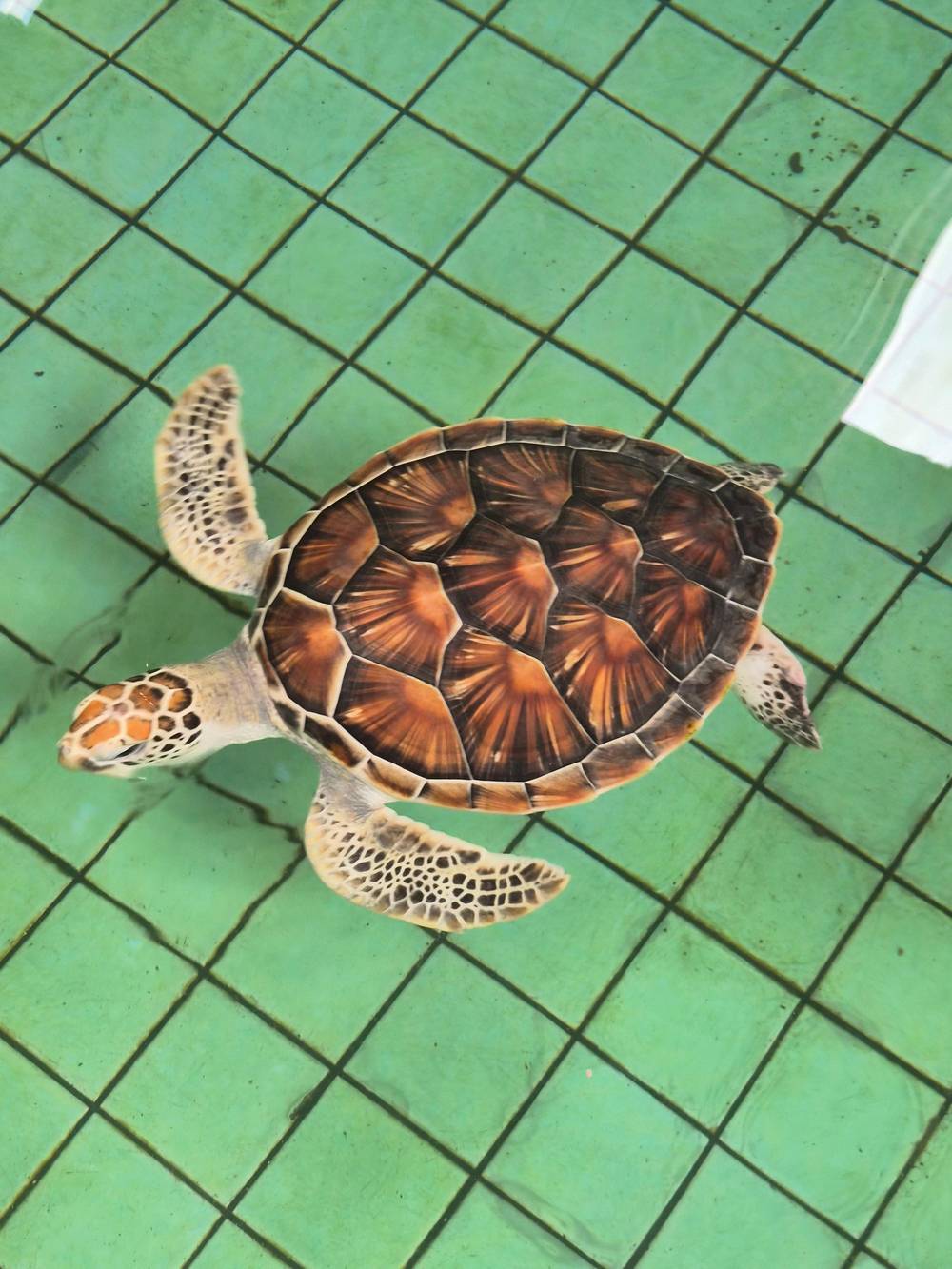
If you came for Khao Lak elephant bathing, the home day is built around it. The tour sold on this site opens its day with an elephant camp where guests bathe the animals and feed them bananas, then moves on to the Ton Pling Waterfall, a bamboo raft with a local boatman, a lunch beside the river and the Sea Turtle Conservation Center, all in 5 hours with hotel pickup. The elephants are one stop among several, not the whole day.
That order matters for planning. The operator confirms the pickup time after booking, and the stops can be reshuffled when the weather turns bad, so the elephants may come earlier or later than the listing implies. Dress for the camp first: you will be bathing and feeding the animals before you ever sit on a raft, and spare clothes in a bag will make the rest of the day more comfortable.
Elephant tours in Khao Lak use the same ingredients differently. One small group of 10 people at most spends 40 minutes at an elephant conservation centre feeding bananas and bathing before a temple stop, lunch and an hour of bamboo rafting. Another, from Phuket and Khao Lak, runs for 10 hours with food preparation, a mud spa and a bath, followed by a waterfall. The elephant part is a few hours in the first and most of the day in the second.
Compared
| Format | Contact | Time | From price |
|---|---|---|---|
| Home rafting day | Bathing and feeding | 5 hours | $69 |
| Observation visit | None, viewing areas only | 3 hours | $53 |
| Eco-walk | Keeper-led, no forced bathing | 2 hours | $69 |
| Sanctuary experience | Feeding, walking, rock pool | 4 hours | $105 |
Starting fares per traveler, not quotes; each listing spells out what its day allows.
The biggest split among Khao Lak elephant sanctuary tours is hands-on against hands-off. A 4 hour experience at the Phang Nga Elephant Park has you walk beside the elephants, prepare their food, feed them and watch one bathe in a rock pool before a cooked lunch. A 5 hour tour has guests prepare vitamin balls as a staff-guided care activity, then call at the Sai Rung Waterfall and the turtle center. These are the formats where you take part.
The opposite model is observation only. One 3 hour visit states that there is no riding, bathing, feeding or physical contact, that guests stay in designated viewing areas and that only trained mahouts engage directly with the elephants. A short visit, listed at 1 to 1.5 hours with a guided tour, says feeding, touching and bathing are not guaranteed, with no riding, no shows and no forced bathing. A 2 hour guided eco-walk adds that guests follow keeper guidance and that no elephant is forced to take part.
Private and longer formats sit in between. The private Khao Sok day pairs 105 minutes at an elephant park, run on an observe-only basis with no riding, bathing or touching, with a bamboo raft, bamboo coffee and a waterfall, from $329 for the group. The home tour's own listing says bathing and feeding, so check what is included before you book. The one-size answer does not exist, so match the format to what you actually want.
Length of the visit
Hours as the listings state them: the eco-walk 2, the observation visit 3, the sanctuary experience 4, the care and waterfall tour 5 and the full elephant care day 10.
Thailand's tourism authority does not pretend the topic is simple. At a forum it organised, TAT put the number of elephants in tourism or reared for it at more than 3,000 nationwide, spread over 250 camps in 22 provinces.5 Its Elephant Care Tourism project stands on welfare, conservation and clear standards.1 For a visitor the useful point is that welfare is framed as the baseline for a camp, not as a bonus feature.
On the standards side, the Department of Livestock Development proposed a welfare standard for domesticated elephants for compulsory promulgation, and once it is enforced, establishments with elephants would be examined and regularly audited.6,2 Until a camp can show an inspection or certification of its own, treat its self-description with caution. The same TAT report points out that releasing domesticated elephants into the forest is difficult, because they are unfamiliar with forest life.7
A group of specialists, vets and camp managers formed in 2015 to address elephants in tourism takes a measured stance: it says boycotting elephant tourism is not the answer, because that can undermine camps that behave responsibly.8 Its audit programme asks operators to submit to regular inspections of diet, medical care, training and mahouts' salaries to gain certification.9 That is a better question for a camp than any adjective on its website.
Your kind of visit
Tell us what you hope to do with the elephants and a matching day appears.
If I want to bathe them
The rafting day
Bathing and feeding, plus a raft and the falls, from $69.
If I only want to watch
The observation visit
No riding, bathing, feeding or contact, from $53.
If I want a short slot
The eco-walk
2 hours, keeper-led, from $69.
If I want to feed and walk
The sanctuary experience
4 hours with a rock pool and lunch, from $105.
If I travel as a private group
The Khao Sok day
Observation only, a raft and a waterfall, from $329.
Ways in
Most stops
Elephants plus river
Calmest
Observation, no contact
Most hands-on
Feed and walk
Start with the plain questions. Do the elephants live on short chains all day? The same TAT report on the specialist group says long periods on a chain are not acceptable and that elephants need room to move.4 Do mahouts handle the animals with training? It adds that mahouts need proper training before they can handle an elephant safely and with confidence.10 A good operator will answer these without hesitation.
Look for stated rules. The listings that spell out their policy say what they do not do: the 3 hour observation visit lists no riding, bathing, feeding or contact, and another sanctuary listing says mahouts there are not allowed to use hooks and may guide the animals only by their ears, with no riding. Those lines are claims by the operators, not findings, so ask what you will see rather than assuming it.
If you see something wrong, you can say so. TAT says the public can report an animal that is being abused or mistreated directly through the DLD4.0 mobile application of the Department of Livestock Development.3 That is useful to know before you go, since it gives you a way to act on something that looks wrong rather than just leaving a bad review afterwards. Rides, shows and tricks are not part of any visit listed on this page.
Price your day
Choose your party size and the fares are added up.
Side-by-side: 4 options
Choose your party size and the fares are added up.
≈
View≈
View≈
View≈
ViewGetYourGuide's starting prices, converted at the ECB reference rate; exact pricing appears when you book.
An elephant visit
Pickup
The visit starts with a pickup in Khao Lak.
Transfer
The van ride takes 30 minutes each way.
At the camp
The visit lasts 105 minutes with a guide, coffee, tea and local snacks.
Rules
Guests stay in viewing areas and only trained mahouts engage directly.
Return
The van brings the group back after the visit.
A wild elephant is a different matter from a camp animal. Guidance relayed by TAT from Thailand's wildlife conservation office says no organised elephant-watching is offered in the national parks, so visitors keep to the park rules and the marked trails.11 It also reminds readers that elephants are wild animals, not pets.12 Nothing in the Khao Lak area suggests you should go looking for wild elephants on your own.
If you drive and meet one, the same guidance says to halt at a distance of at least 30 metres.13 On foot, stay calm and quiet and avoid shouting or sudden movements that could startle the animal.14 Park staff also advise sticking to marked trails, travelling in groups and avoiding isolated areas at dawn and dusk.15 Those rules apply to Thailand's parks in general and are not a promise that elephants roam near Khao Lak.
The camps themselves are mostly inland of the coast. TAT's guide to Phang Nga mentions Dad's Field Elephant Camp, a hidden sanctuary in a quiet corner near Takua Pa, north of Khao Lak, where guests see elephants in a more natural habitat.16,17 The same article lists elephant care tourism as a major attraction of the area.18 You can reach such camps through day tours that include pickup.
Video
Paradise Falls Family on YouTube · The video only starts loading on your tap.
Still, elephants shouldn’t be kept on chains for prolonged periods; they also need to have free movement
Wear what you can get wet. A 10 hour elephant care listing suggests spare clothes, since bathing the animals can leave you wet, as well as a camera, sunglasses and sun lotion. A private day on the Sok River asks for comfortable walking shoes for uneven ground, along with sunscreen, a hat, insect repellent and a towel. A sealed pouch for your phone is a good idea on any of these days, and a hat helps while you wait in the sun.
Think about the ground and the heat. Expect uneven ground at a camp, so closed shoes help on the walk and sandals help in the water. Keep your hands clean after feeding, bring water, and follow keeper instructions at all times: the 2 hour eco-walk says guests must do so, and that refunds are not given when an activity changes because of elephant wellbeing. That last clause is worth reading before you pay.
Children can enjoy a calm, short visit, but supervise them closely. The private day lists that children must be supervised at all times, and that the day is not suitable for guests with severe mobility limitations. For a young family the 3 hour observation visit or the 1 to 1.5 hour visit are easier to fit around naps than a 10 hour day. Prices start from $48 for the shorter visit.
FAQ
The home tour lists an elephant camp with bathing and feeding with bananas.
One 3 hour visit lists no riding, bathing, feeding or contact.
The observation and sanctuary listings above all state that there is no riding.
Listings run from 1 to 1.5 hours to 10 hours.
TAT says the public can report abuse directly in the Department of Livestock Development app.3
The Asian Captive Elephant Working Group says a boycott is not the answer.8
One listing recommends a change of clothes for bathing.
Sources
Continue reading
Planning a river day near Khao Lak? Ask a real person here.